Introduction
In hot regions like Dubai, Kigali, Cairo and Perth, the sun isn’t just a backdrop it’s a design partner. Architects today working with firms like Mazfinity are turning the challenge of heat into a creative asset. The goal is simple: reduce heat gain and increase comfort in tropical or desert climates by using smart design. In this post, we’ll explore practical strategies for climate responsive design, and show how modern architecture in hot regions is becoming cooler without relying solely on air-conditioning.
Why climate responsive design matters
Hot regions place extra demands on buildings: intense solar radiation, high external temperatures, glare, and in some cases humidity. If a building simply uses standard design logic, it absorbs too much heat, costs more to cool, and can feel uncomfortable for occupants. Research shows that passive design strategies can drastically reduce these loads. By anticipating the climate rather than fighting it, architecture becomes greener, more comfortable and more cost-efficient.
Four key strategies
Here are four major strategies that work particularly well in hot climates:
1. Orientation, form and footprint
Where you point the building and how you shape it influences how much heat it absorbs. For example, in a hot-arid climate orienting the long axis east-west, compacting the building footprint and including courtyards helps reduce sun exposure. At Mazfinity we often orient outdoor living spaces to the north (in the Northern Hemisphere) or south (in the Southern Hemisphere), and create deep roof overhangs so direct sun is blocked but daylight still enters.
2. Shading, filtering and reflective surfaces
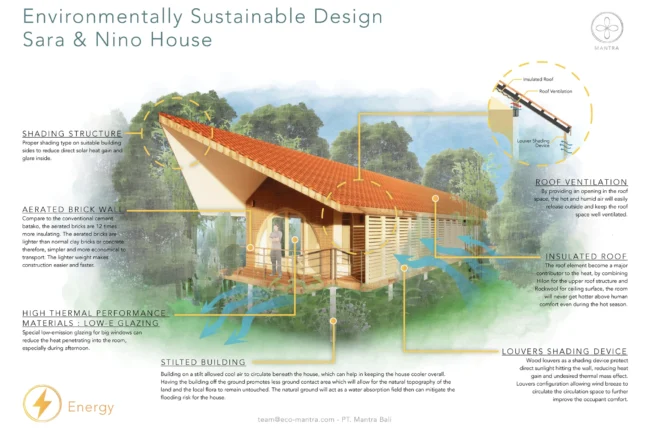
Sun-shading devices such as louvers, brise soleil, vertical fins, pergolas and screens are essential. They reduce direct heat gain without turning off the daylight. Light coloured and reflective external surfaces lower absorption of solar radiation, which helps keep the building envelope cool. Many of our projects in Dubai and Cairo use high-albedo finishes on roofs and façades to drop internal temperatures by several degrees.
3. Ventilation and passive airflow
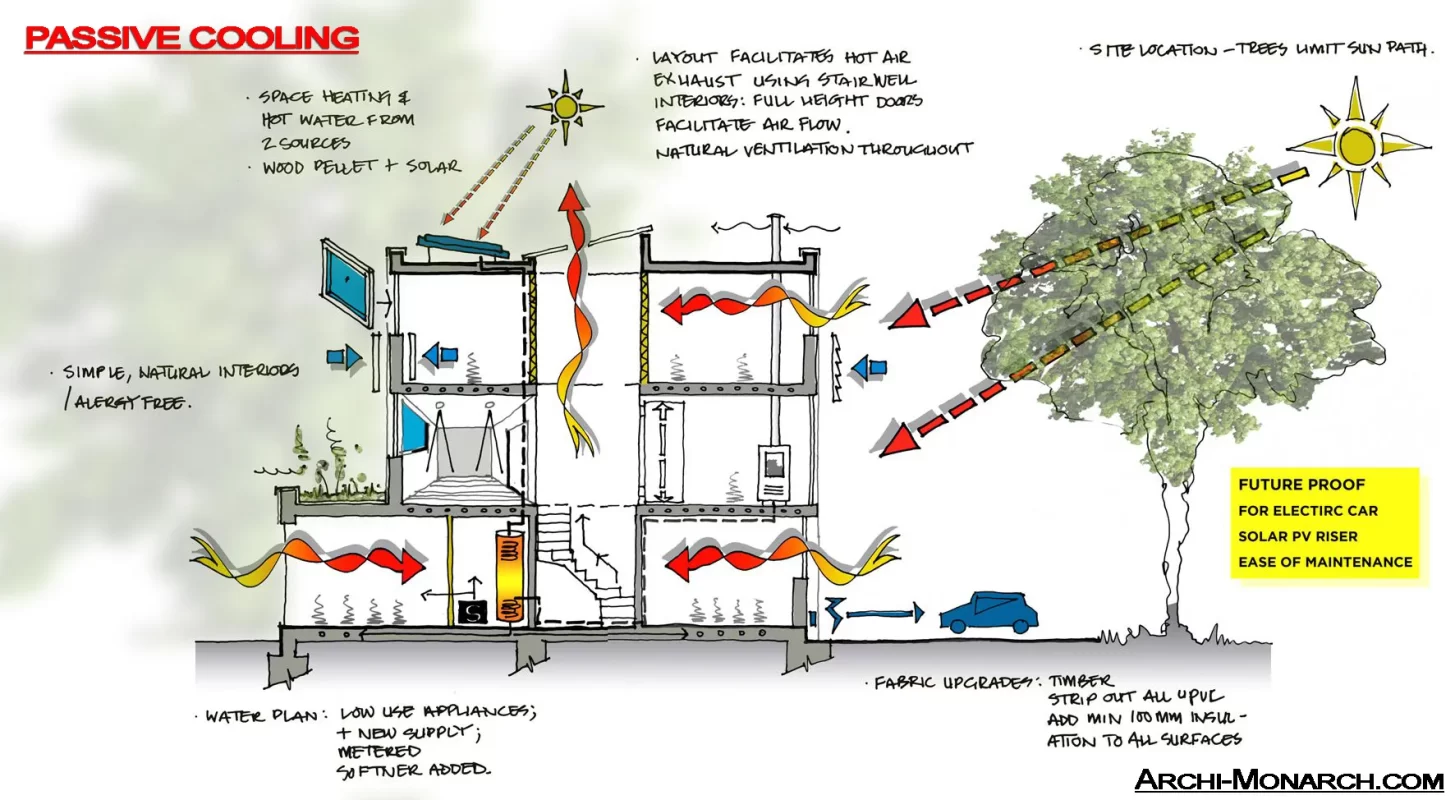
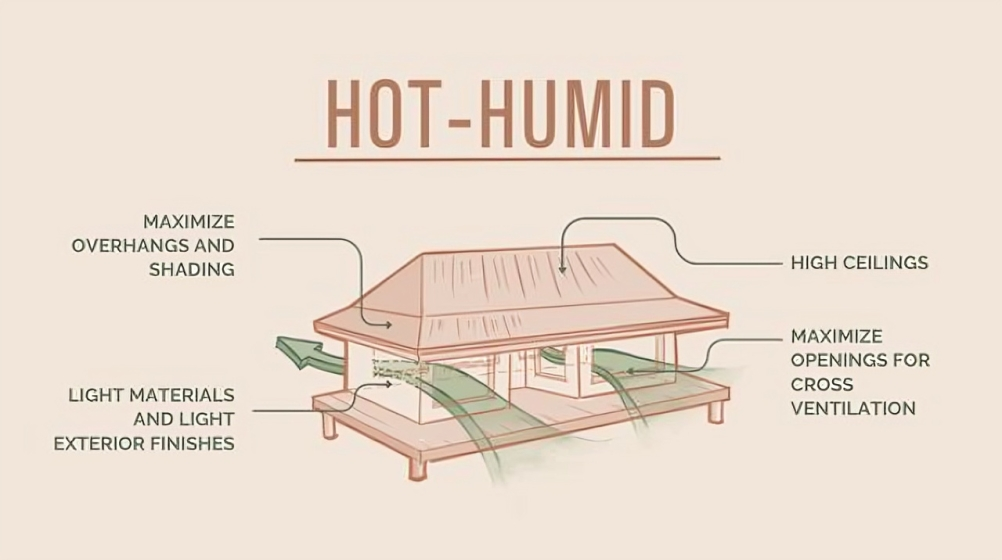
Designing for airflow is a big win. Cross-ventilation (openings on opposite walls), stack-ventilation (high vents and low inlets), solar chimneys and elevated ceilings all help move hot air out and bring cool air in. In Kigali, where there’s more humidity, we combine airflow with shaded outdoor spaces and internal courtyards to boost comfort without heavy mechanical cooling.
4. Thermal mass, materials and micro-climate
Using materials intelligently is key. In some hot regions, high thermal mass (e.g., concrete, stone) helps by absorbing heat during the day and releasing it at night. In other hot-humid regions, light-weight construction that responds quickly to airflow may work better. Landscaping, green roofs and water features around the building create a micro-climate: cooler air is drawn in, reducing the load on the building itself.